From Inspiration to Execution
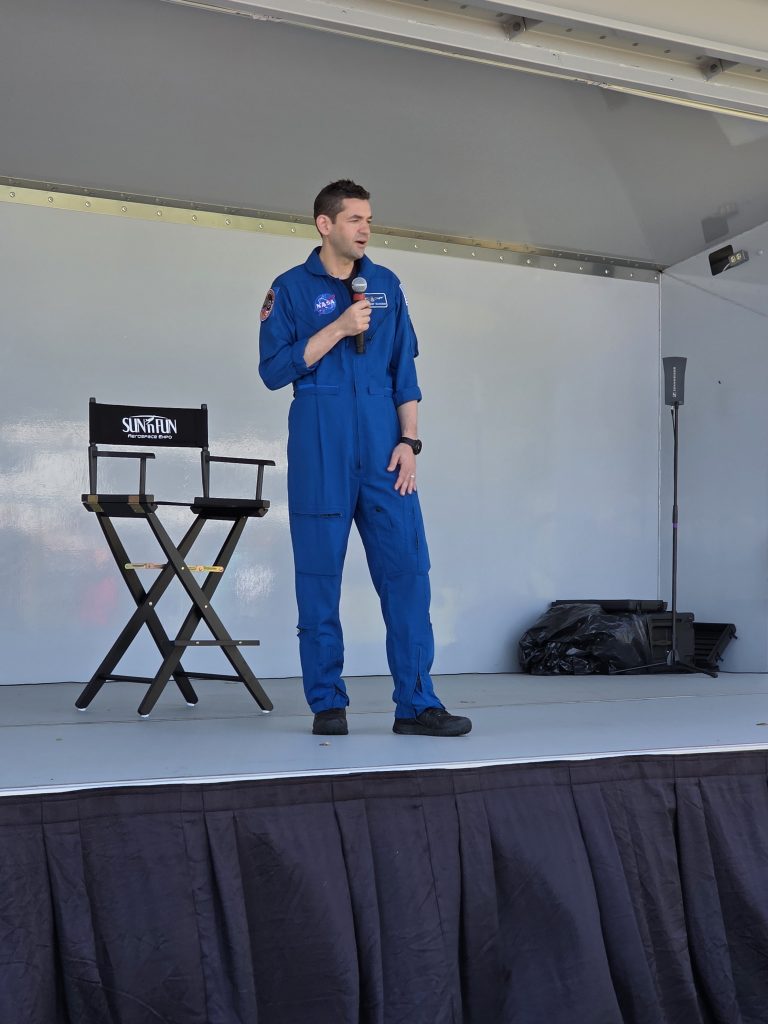
At the Sun ’n Fun Aerospace Expo in Lakeland, Florida, NASA Administrator Jared Isaacman delivered a wide-ranging address that mixed inspiration with a blunt assessment of where the agency is headed. Framed by the excitement of the Artemis program and a new generation of space enthusiasts, Isaacman made it clear that NASA’s next chapter is not just about returning to the Moon but building a sustained human presence beyond Earth.
The presentation opened with a viral moment featuring a young student’s passionate call for space exploration, symbolizing what Isaacman described as the “Artemis Generation.” That energy carried into a recap of Artemis II, which successfully sent astronauts farther into space than ever before, reaching speeds over 24,000 miles per hour before returning safely to Earth.
From there, Isaacman laid out NASA’s near-term vision: frequent missions to the Moon’s south pole, where water ice could support long-term habitation. Beginning as early as 2027, NASA plans a steady cadence of robotic landings to test technologies, deploy rovers, and prepare the groundwork for a permanent lunar base. Unlike the Apollo era, he emphasized, the goal now is permanence—“we’re going back to stay.”
Building Toward the Moon and Mars
Isaacman described the Moon as a proving ground for deeper space exploration, particularly Mars. He suggested that a crewed mission to Mars could realistically occur within the next 10 to 20 years, but only after critical capabilities are developed on the lunar surface. These include in-situ resource manufacturing, nuclear power systems, and new propulsion technology systems that would allow astronauts to travel farther and return safely.
At the same time, NASA is shifting its strategy. Rather than spreading funding across numerous smaller projects, Isaacman said the agency is now focusing on “needle-moving objectives”—large-scale efforts like building a moon base, increasing launch frequency, and advancing deep space propulsion. He acknowledged past inefficiencies, noting that billions had been spent on programs that failed to deliver meaningful outcomes, and stressed that future investments would be more focused and results-driven.
A key part of that shift is increasing launch cadence. Isaacman pointed out that earlier NASA programs routinely launched missions every few months, while recent efforts have been separated by years. The goal now is to return to at least an annual rhythm—and eventually faster—to maintain expertise and accelerate progress.
Audience Questions Highlight Challenges and Opportunities
Following his remarks, Isaacman fielded a series of questions from the audience that highlighted both enthusiasm and concern about NASA’s direction.
One attendee raised concerns about funding for scientific research, particularly studies on how the human body responds to space environments. Isaacman responded by acknowledging the importance of such research but reiterated that NASA must prioritize programs that directly support major exploration goals, such as keeping astronauts healthy for long-duration missions. He emphasized that better allocation of resources would ensure critical science receives proper support.
Another question focused on the future astronaut workforce. Isaacman explained that NASA is moving beyond its traditional reliance on test pilots and is seeking a broader range of expertise. As missions shift toward long-term habitation, the agency will need engineers, medical professionals, software specialists, and scientists which are the same diversity of skills required to sustain remote outposts on Earth.
Questions also touched on technical challenges, including the future of rocket engines and workforce retention. Isaacman addressed concerns about aging systems like the RS-25 engines and emphasized the importance of competition among commercial partners such as SpaceX and Blue Origin to drive innovation and reduce costs. He also outlined efforts to strengthen NASA’s workforce through new hiring programs and closer collaboration with industry.
International cooperation emerged as another theme during the Q&A. Isaacman highlighted contributions from global partners, including Japan’s development of a pressurized lunar rover and Italy’s work on habitation modules. He stressed that while NASA leads the effort, the Artemis program is a collaborative mission for humanity as a whole.
The session concluded with a forward-looking message: NASA is returning to its roots as an active, execution-driven agency, focused on ambitious goals and tangible results. With plans for a lunar base, increased launch frequency, and eventual missions to Mars, Isaacman’s remarks reflected an agency aiming not just to revisit past achievements—but to surpass them.
“This is your NASA,” he told the Lakeland crowd. “We changed the world once. We’re about to do it again.”