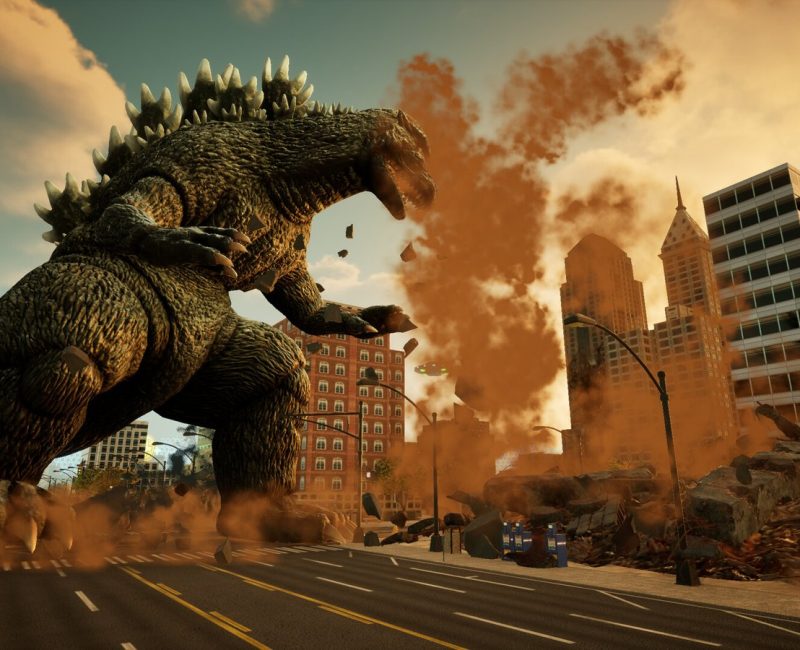
Twenty-four years after it first let us hurl skyscrapers at each other, Godzilla: Destroy All Monsters Melee is back. Atari, original developer Pipeworks and Toho International launched Godzilla: Destroy All Monsters Melee Remastered on November 3 for PlayStation 5, Xbox Series X|S, PC on Steam and Nintendo’s Switch hardware, and it’s the rare multiplatform release where every console crowd gets the same game on the same day for the same $29.99.
That’s the good news. The more complicated news is that critics mostly agree the remaster nails the feel of the 2002 original, then trips over a brand-new unlock system that nobody asked for. If you’re thinking about grabbing it this week, here’s what you’re actually getting, what’s changed and where the catch is.
Some quick history first, because it matters for how this remaster was built. The original Destroy All Monsters Melee landed on GameCube in 2002 and on the original Xbox in 2003. Pipeworks made it, Atari published it, and it became one of those cult couch games that people still bring up whenever a new Godzilla movie drops. As a kid who grew up on PlayStation 2, I’ll admit I missed it the first time around; the series didn’t reach Sony’s console until its sequel, Save the Earth. So the idea of the original finally showing up on a PlayStation, a Switch and a modern PC all at once is genuinely appealing to me.
What makes this release interesting is that it’s the same team coming back to its own work. In Atari’s launch announcement, Pipeworks CEO Lindsay Gupton said that “by rebuilding the game from the ground up with today’s technology, we’ve unlocked the scale, destruction and intensity our team always dreamed of.” Atari’s chief creative officer Mike Mika framed it as a natural reunion, since Atari was the original publisher and Pipeworks the original developer.
What’s actually new in the remaster
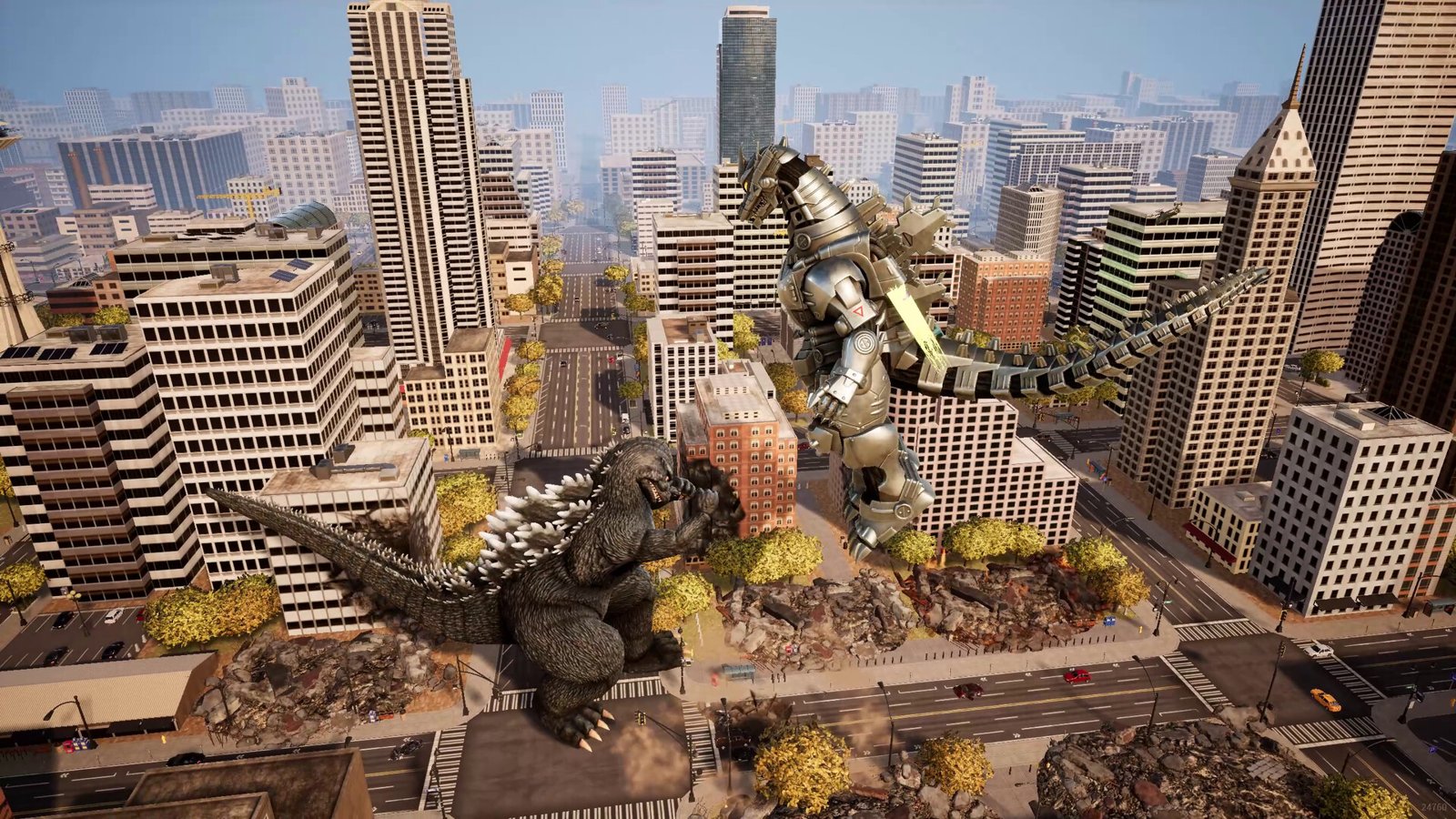
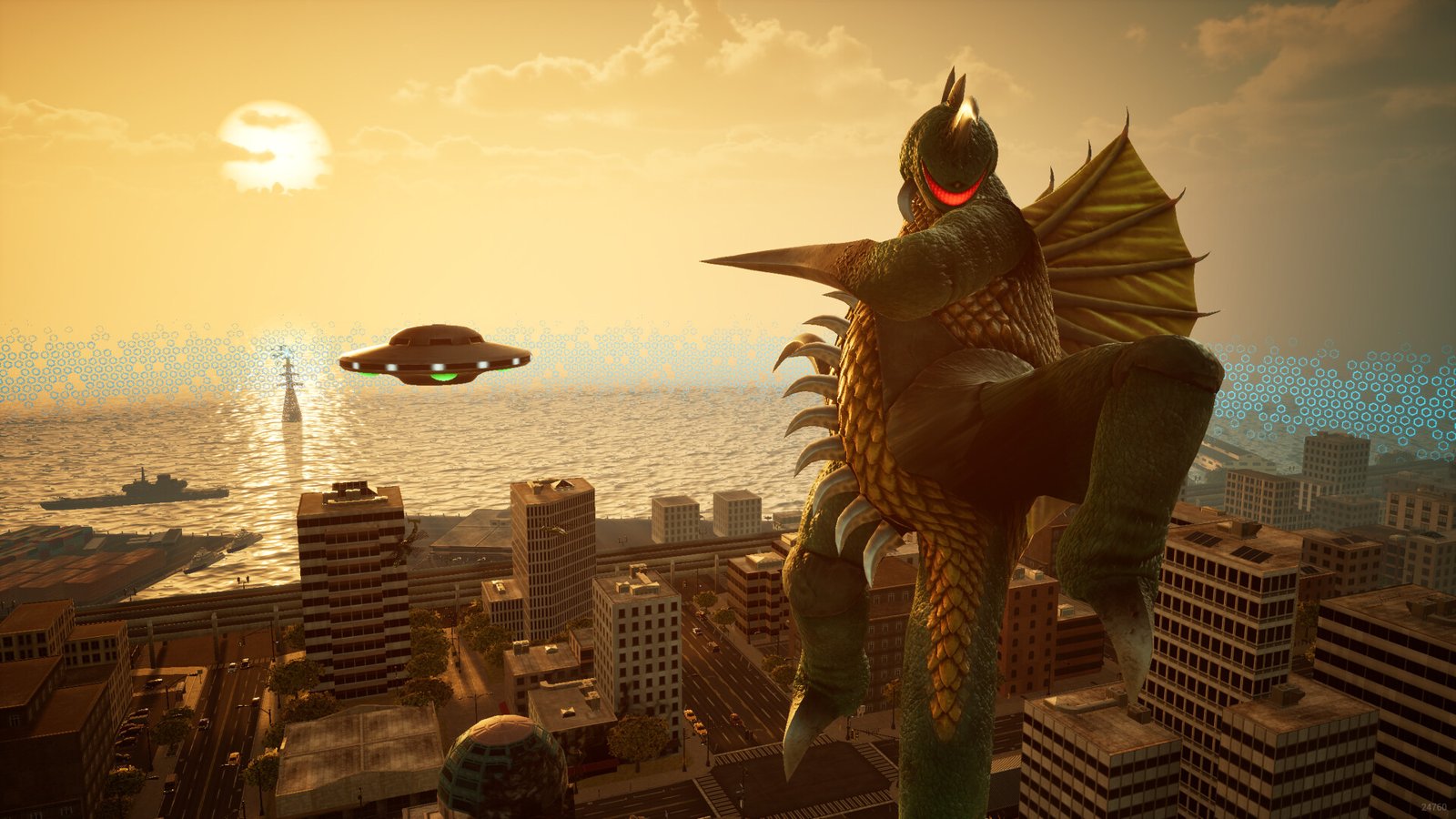
Under the hood, this isn’t a quick upscale. Atari’s June announcement describes a rebuild in Unreal Engine 5 with 4K support, “99% mechanical fidelity” to the original, online matchmaking and support for modern controller haptics. In other words, the combat is supposed to play like 2002 while the cities, monsters and effects look like 2026. Reviews broadly back that up: Polygon noted the new textures lean into the look of rubber suits stomping a miniature city, which is exactly the right instinct for this series.
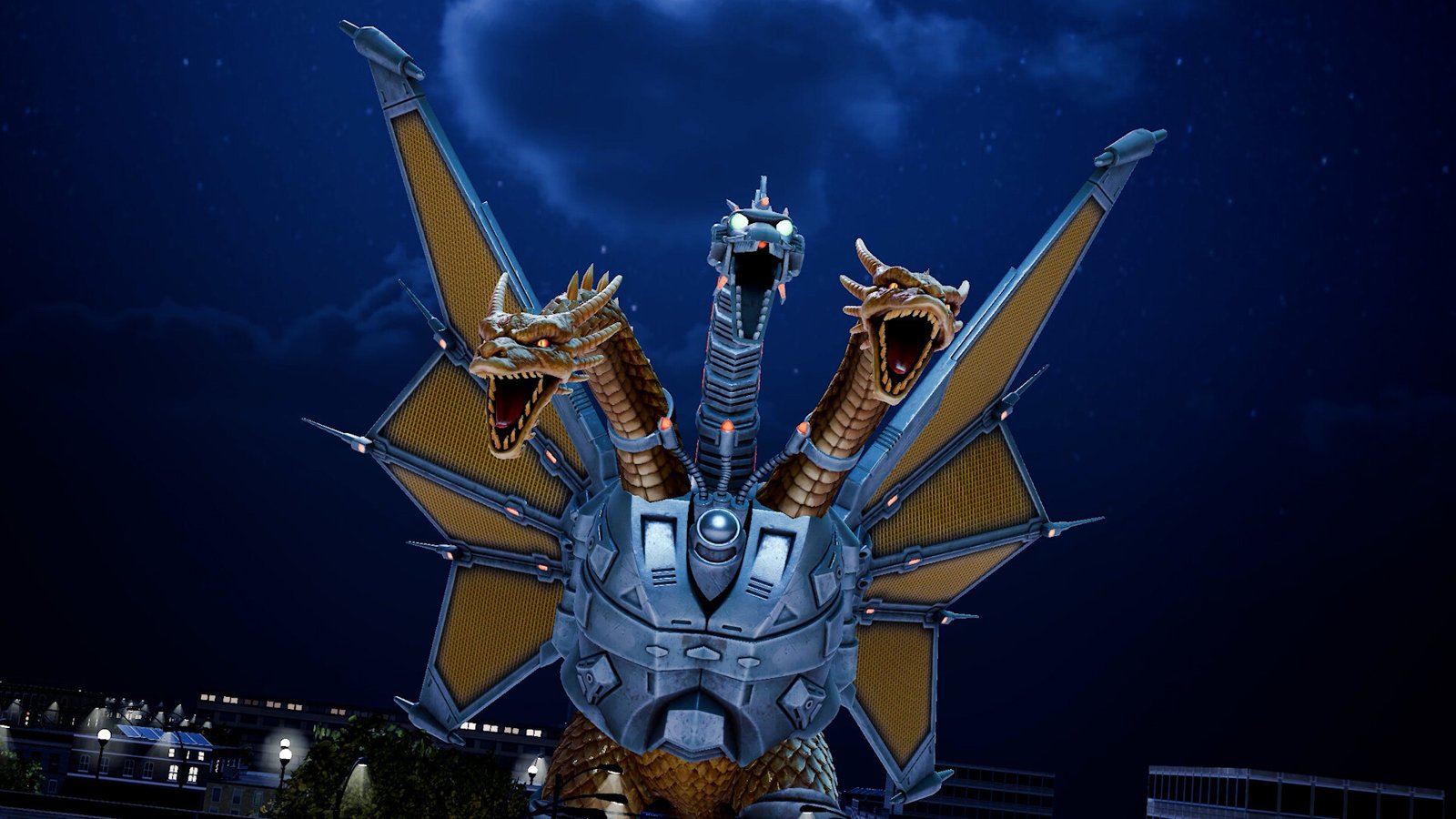
The roster sits at 12 kaiju: Heisei Godzilla, Godzilla 2000, Anguirus, Megalon, Gigan, Rodan, King Ghidorah, Mecha-King Ghidorah, Destoroyah, Showa-era Mechagodzilla, Kiryu and Orga. Two changes stand out for longtime fans. The Showa-era Mechagodzilla replaces the Heisei version from the original, a swap Atari and Pipeworks said fixes a continuity mix-up, and Kiryu, the Millennium-era Mechagodzilla, is new to this game, according to The Otaku Authority’s roster breakdown.
On the official Atari store page, the publisher lists eight locations, each with day and night variations, spanning real-world cities, Monster Island and the alien Mothership. Buildings are still weapons, so yes, you can still pick up a tower and swing it at Megalon. Local multiplayer supports up to four players, and online play is new.
Pricing is simple, with one wrinkle. Digital copies are $29.99 on every platform, and the Steam version was listed at $29.99 with no launch discount when I checked this morning. Physical editions are sold through atari.com: $29.99 on PS5 and $39.99 for a full Switch 2 cartridge. A Digital Deluxe Edition adds a Burning Millennium Godzilla (2025) skin, a black Mechagodzilla (1974) skin, an extra map called Smash Station and a black-and-white movie filter; on Steam, that upgrade is $5.99 on its own. Atari also notes the Switch digital versions arrive in Japan and select Asian markets on November 5.
PC players don’t need much horsepower. Steam lists a Ryzen 5 3600 or Core i7-9700, 16 GB of RAM and a GTX 1650 with 4 GB of VRAM as the minimum, with a Ryzen 5 5600X, 32 GB of RAM and an 8 GB GTX 1070 or 1080 recommended. The game wants DirectX 12 and 8 GB of storage. Steam doesn’t list an AMD graphics card in either tier, which is a small but familiar annoyance for Radeon owners, though cards in that performance class shouldn’t have trouble with a game this light.
The catch: a grind the original never had
Here’s where the reviews line up almost word for word. In the original game, you unlocked monsters and stages by meeting conditions as you played. The remaster replaces that with a research-point system, where you earn currency by playing and spend it to unlock monsters, maps and gallery items in whatever order you like. On paper, Atari calls that an “improved unlock system.” In practice, critics found it slow.
GameSpot’s review called it “hours and hours of grinding” to unlock everything, and pointed out that the original GameCube and Xbox releases never had that kind of arbitrary gate. Polygon made a similar point, arguing the new system pushes you to replay dull modes and removes the surprise of a new monster appearing mid-session. According to GameDaily’s review roundup, MonsterVine found that Rodan alone costs 18,000 research XP, with only one item progressing at a time.
There’s one useful tip buried in GameSpot’s review: Tournament Mode, which unlocks all the monsters and stages, is tucked away in the settings menu, and the game doesn’t do a great job telling you it exists. If you mostly want to play with friends on the couch and skip the grind, that’s worth knowing before your first session.
The other common complaints are about depth. The roster of 12 is small by modern standards, single-player runs thin once everything is unlocked, and Nintendo Life flagged the lack of a Japanese voice track while still scoring it a 7 out of 10. GameDaily’s roundup also notes online matches are limited to two players, so the four-player chaos is a local-only thing. As of November 3, that roundup put the game at 73 on Metacritic for PS5 and 70 on OpenCritic, where just 31% of critics recommend it. That’s a fair snapshot: most reviewers liked the game they played but hesitated to tell everyone to buy it.
None of that is a shock. This was always a simple arena brawler, a little sluggish and a lot silly, and the remaster mostly keeps it that way on purpose. Some critics read that faithfulness as a strength. Others, like SmashPad, felt the novelty wore off fast.
Cody’s take
I love that this exists. Licensed Godzilla games have been rare for years, and getting the original team to rebuild one of the best-loved ones, on every major platform, at $30, is a genuinely nice thing for kaiju fans. The fact that it plays almost one-to-one with the 2002 version is the whole point, and it sounds like Pipeworks respected that.
But I’d go in with realistic expectations. This is a party game for short sessions with friends, not something with deep combo systems or a big single-player campaign, and the research grind seems to work against exactly the pick-up-and-play energy that made the original fun. If you have people to play with locally, it sounds like a great $30 night in, especially if you head straight to Tournament Mode. If you mostly play solo or online, I’d wait for a sale or a patch that eases the unlock pace. Either way, I’m just happy Godzilla is throwing buildings again.
Author