


Six years into its life, the regular PlayStation 5 is still picking up new tricks. On November 13, Sony announced the second wave of games getting Quick Spectral Super Resolution (QSSR), the AI upscaler it built for the base console, and the first of them is already live: Marvel’s Spider-Man 2 got its update the same day. Control Resonant, Arc Raiders, The Finals, No Man’s Sky and Hell Let Loose: Vietnam are queued up behind it over the coming weeks.
That is a nice bump for anyone who never bought a PS5 Pro. It is not free performance, though, and the details matter if you care about frame rates as much as clean edges.
Quick refresher. Sony introduced QSSR on October 1 as a “new performance tier” of the PSSR upscaler that has been exclusive to the PS5 Pro. The Pro has dedicated machine-learning hardware for that job. The standard PS5 doesn’t, which is why most people assumed PSSR-style upscaling would never make the jump. Sony’s answer was a slimmed-down neural network plus a hand-tuned implementation squeezed onto the base console’s GPU. Sony itself still calls PSSR “the gold standard” on Pro and pitches QSSR as a step up from conventional upscaling on the regular PS5, not as a match for the Pro.
The launch titles were Marvel’s Wolverine and Ghost of Yōtei. Insomniac went all in: its Wolverine update 1.002.000 turned QSSR on by default on PS5.

Who’s getting QSSR, and when
The new PlayStation Blog post, written by Sony graphics R&D principal engineer Daniel Craig, lays out a staggered rollout rather than a single patch day. Here is how it shakes out based on what each studio said:
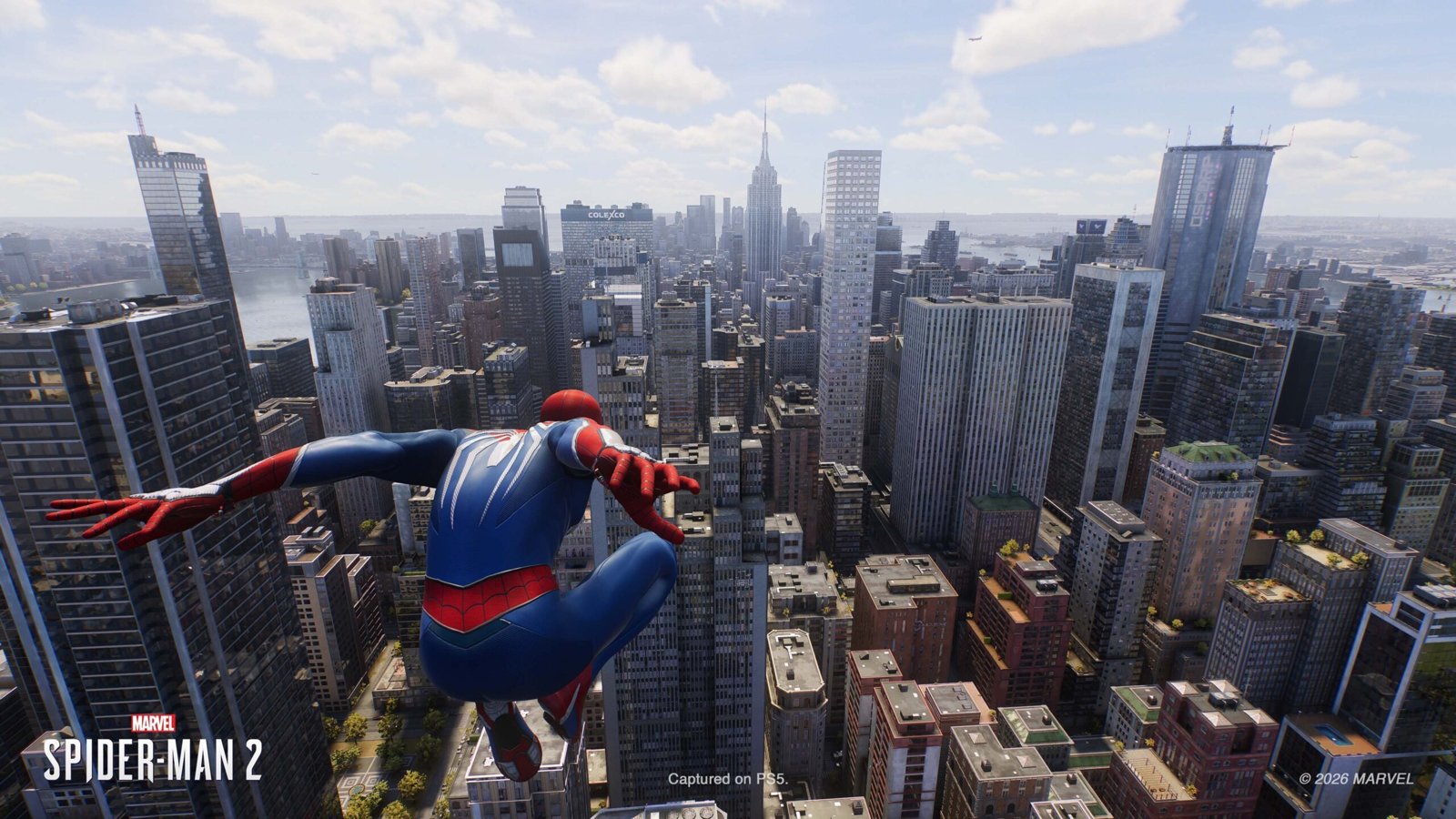
- Marvel’s Spider-Man 2 (Insomniac Games): live now, in both Fidelity and Performance modes.
- Control Resonant (Remedy): in an update coming in December.
- Arc Raiders and The Finals (Embark Studios): “coming soon,” with no date.
- No Man’s Sky (Hello Games): “in the next few weeks.”
- Hell Let Loose: Vietnam (Expression Games): in an upcoming update, no date.
Insomniac’s head of technology Mike Fitzgerald said the studio decided to bring QSSR to Spider-Man 2 after “having seen great results” with it in Wolverine. That makes sense on paper, since both games run on Insomniac’s engine. As Digital Foundry pointed out, Spider-Man 2’s version of New York is a much wider open world than Wolverine’s more contained spaces, so it will be a real test of how well the upscaler holds up when you’re swinging across rooftops at speed.
The quiet reason this list grew so fast is plumbing. QSSR uses the same interface as PSSR, so any game that already supports the Pro’s upscaler is a natural candidate. Craig told Digital Foundry back in October that it is “fundamentally a drop-in replacement” for PSSR titles after a few days of tuning. Remedy’s Erik Jansson said the studio “worked closely with Sony” to have Control Resonant ready in December.
Sony also notes that QSSR, like the upgraded PSSR, came out of Project Amethyst, its graphics collaboration with AMD, the company behind the PS5’s chip. That partnership is the backdrop here, but the story is really about what PlayStation owners get on the console they already have.
The catch: AI upscaling costs frame time
Here’s where I want to slow the hype down a little. Sony’s blog is full of words like “sharper” and “more stable,” and the early analysis backs that up. But the best independent numbers so far show there’s a real cost.
In its October coverage and follow-up DF Direct, Digital Foundry measured QSSR in Wolverine adding roughly 1.5 to 1.8 milliseconds per frame compared with Insomniac’s own upscaler when going from 864p to 1440p. In an uncapped Performance mode, that showed up as about 8 to 10 fewer frames per second. Push the output to 4K in Fidelity mode and the extra cost climbed to around 4.4 milliseconds. When a 60fps game only gets about 16.7 milliseconds to build each frame, that’s a big slice.
The reason is the hardware gap. The Pro’s upscaler leans on about 300 TOPS of dedicated AI hardware; the base PS5 has nothing like that, so QSSR has to run its math, reportedly mostly in FP16, on the GPU’s regular shader hardware. It’s impressive that it runs at all, but it’s competing with the game for the same resources.
The good news is that this isn’t the whole picture. In Wolverine’s dynamic-resolution 60fps mode, Digital Foundry found the game simply dropped its internal resolution a bit to hold its frame rate. Because QSSR cleans up the lower-res image so much better, the result was a better-looking game at basically the same performance. In Ghost of Yōtei, DF reported the cost was only slightly higher than the game’s existing FSR 3 path. And the consistent takeaway was that QSSR shines at roughly 1440p output in 60fps modes, which is exactly where the base PS5 struggles most. If you were expecting a clean 4K like the Pro produces, that’s not what this is.
That’s also why the list of games is more interesting than it first looks. Digital Foundry’s William Judd singled out Hell Let Loose: Vietnam, which was widely criticized for its image quality at launch, and Control Resonant, which could show aliasing and artifacts in Performance mode. Those are the games where a better upscaler could make the most difference. Arc Raiders, The Finals and No Man’s Sky already look fairly clean, so the gains there may be more subtle.
One open question: whether each studio adds QSSR as an extra toggle or makes it the new default. Wolverine turned it on by default, while Sony’s October post described the first patches as adding QSSR as “an additional graphics option.” For competitive shooters like The Finals and Arc Raiders, I’d personally want the choice, because some players will always trade a little sharpness for a few more frames.
Cody’s take
I grew up on the PS2, a console that kept looking better years into its life as developers learned to squeeze it. QSSR feels like a modern version of that, except Sony is shipping the improvement through a software library instead of waiting for studios to figure it out on their own. For the huge number of people who own a standard PS5 and had no interest in a Pro upgrade, that’s a genuinely good deal.
But I’d temper expectations. This is a better upscaler, not a hardware upgrade. In some modes you’ll pay for it with frame rate, the gains will vary game to game, and so far we only have independent testing for the first two titles. Spider-Man 2 is live now, so the next few weeks of comparisons will show whether QSSR holds up in a big open world. If it does, I’d expect this list to keep growing, and that’s the part I’m most excited about.
Sources: PlayStation Blog (Nov. 13), PlayStation Blog (Oct. 1), Insomniac Games support, Digital Foundry, The Verge, tbreak.

