


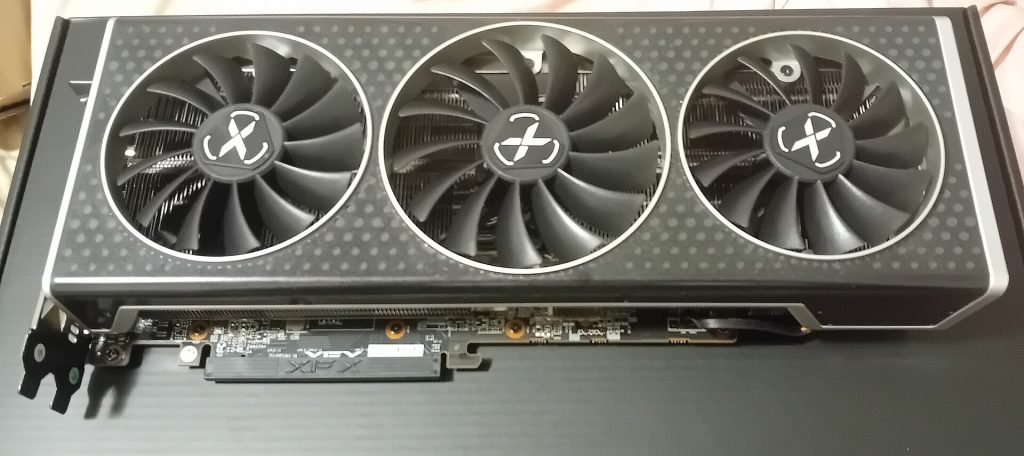
Every couple of months, the Linux kernel goes through a two-week sprint called the merge window, when maintainers pour finished work into Linus Torvalds’ tree before the bug-fixing release candidates start. The one wrapping up this weekend for Linux 7.4 is not a normal one. By the numbers, it’s the busiest merge window the kernel has ever had, and for anyone gaming on a Radeon card through a TV or HDMI monitor, it carries a fix people have been waiting on for years: HDMI 2.1 is finally switched on by default in AMD’s open-source driver.
As of Sunday morning, Linux 7.4-rc1 hasn’t been tagged yet, but it’s expected later today. Here’s what’s going in, why the commit count is exploding, and what it means for your rig.
A merge window that broke the chart
Some quick context first. Linux 7.3 shipped on October 18, and it was already a record-setter, with 18,765 non-merge commits from 3,021 developers, 807 of them contributing to the kernel for the first time, according to LWN. In his release note, Torvalds said he was heading into his annual family vacation and that his merging schedule might be a little unusual, which raised the possibility of a three-week window instead of the usual two.
He kept up anyway. Michael Larabel at Phoronix counted 19,671 commits landing since the 7.3 tag as of Sunday morning. For perspective, the 7.3 merge window brought in 16,267, 7.2 had 14,395 and 7.1 had 13,963. In a follow-up comparing every merge window back to Linux 3.1 in 2011, 7.4 sits well above everything else. For most of the last decade, a big window meant 13,000 to 14,000 commits. This one is pushing 20,000.
The source tree is growing right along with it. By Phoronix’s count using the cloc tool, the tree went from about 41.02 million lines at the 7.3 tag to roughly 41.61 million lines ahead of rc1, which works out to nearly half a million new lines of actual code once you strip out comments and blank lines. At this pace, the kernel should cross 42 million lines sometime early next year.


Why so many patches? AI is a big part of it
Linux is more popular than ever, from handhelds to giant data centers, but that alone doesn’t explain a jump this steep. Phoronix points to AI and LLM tooling as a major driver: automated bug hunters and AI-assisted patch writers are generating a flood of reports and fixes, and kernel maintainers have openly described feeling overwhelmed by it. A lot of that work is genuine cleanup. Some of it is noise.
The clearest example from this cycle is a little bit of kernel drama. Greg Kroah-Hartman had added a new taint flag, TAINT_FORCED_BIND, that marks a running kernel whenever someone uses the sysfs interface to manually bind or unbind a device from a driver. The point was to flag bogus bug reports from fuzzers that were attaching random hardware to drivers it had nothing to do with. It made it into 7.4, and then got reverted on Friday once it became clear VFIO depends on that same bind and unbind path to pass PCIe devices through to virtual machines. In the revert, Greg called VFIO “a crazy beast” and said the idea will be revisited after 7.4. If you run a GPU passthrough setup for a Windows VM, that’s good news, because your normal workflow would otherwise have started tainting the kernel.
The headliner for gamers: HDMI 2.1 on Radeon, on by default
Now the fun part. The main graphics pull for 7.4, sent by DRM maintainer Dave Airlie and posted to the kernel mailing list, sums up the AMD side in one line: amdgpu “enables HDMI 2.1 FRL and other good things finally.” That “finally” is doing a lot of work.
FRL, or Fixed Rate Link, is the signaling mode HDMI 2.1 uses to reach the high-bandwidth combos people actually buy HDMI 2.1 gear for, like 4K at 120Hz and beyond. Radeon owners on Linux have been stuck without it for years. As Phoronix recaps, the open-source work had been blocked by the HDMI Forum until that roadblock cleared earlier this year. If you’ve ever hooked a Radeon PC up to a big OLED TV and wondered why Linux topped out lower than Windows over the same cable, this was why.

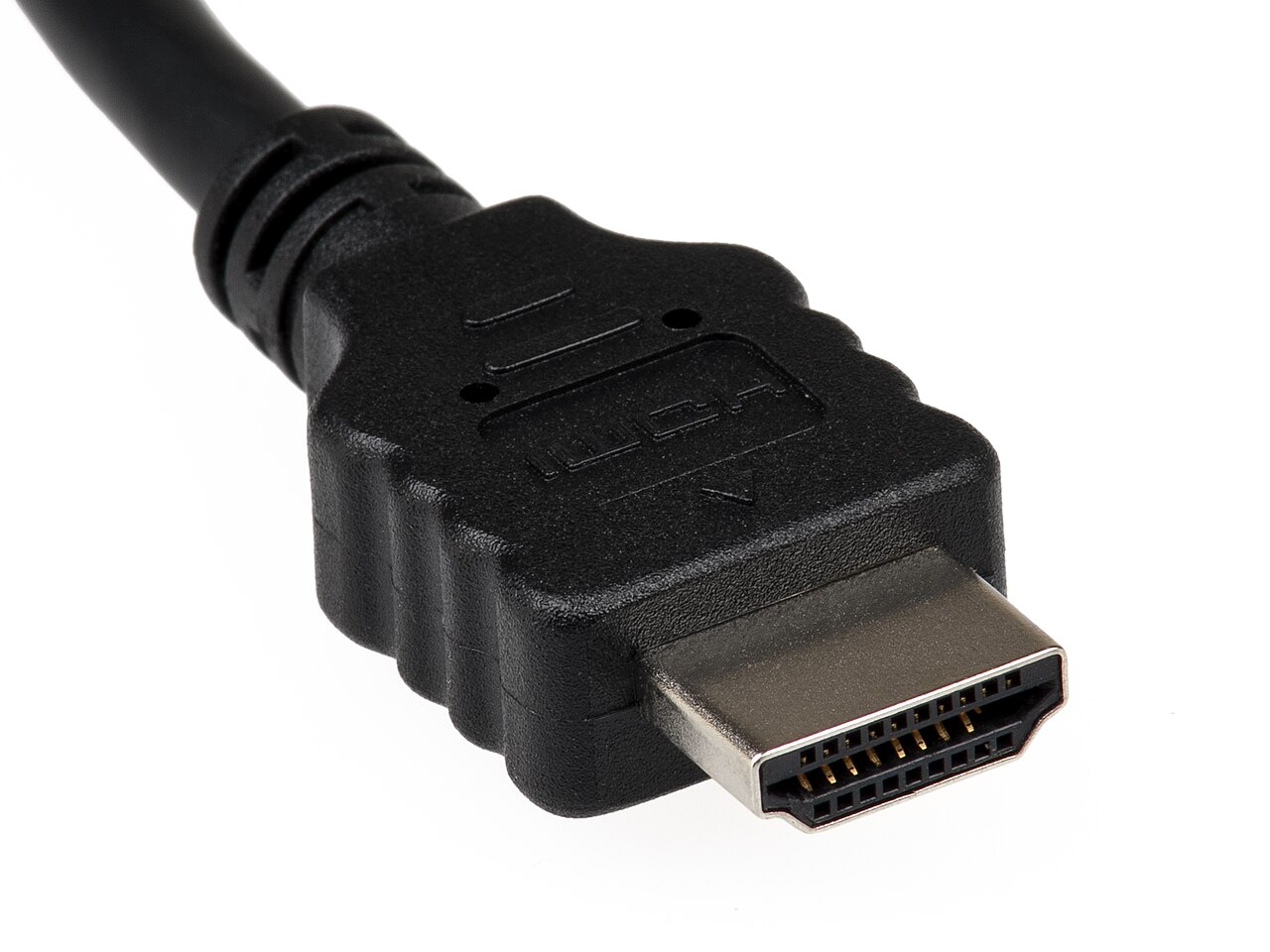
The reason it’s on by default now, instead of hidden behind a toggle, is that the pieces around it are in place too. The changelog in the drm pull lists HDMI 2.1 FreeSync support, HDMI 2.1 VRR, HDMI 2.1 ALLM (the auto low latency mode that tells your TV to drop into game mode), and parsing of the AMD vendor-specific data block in a display’s EDID for FreeSync. Turning on FRL without VRR would have felt like a downgrade to plenty of TV gamers, so landing the whole package together makes sense.
AMD also spent the last stretch before the window polishing it. In its final feature pull for 7.4, the driver started sending HDMI VRR metadata in the VTEM info packet, which should stop the brief blank screen some displays showed when variable refresh kicked in or out. There’s also a link training timeout fix aimed at passing HDMI 2.1 compliance testing.
More AMD, plus Intel, NVIDIA and Qualcomm
The Radeon driver isn’t only about TVs this time. Linux 7.4 adds UALink over Ethernet support on the data center side, and Phoronix notes support for the NPU in AMD’s Ryzen AI Max 400 series, codenamed Gorgon Halo. That’s a nice sign for local AI on Linux, since those chips are pitched squarely at running models on-device.
Elsewhere in graphics, Intel’s Xe driver gains video memory health checks and handling for degraded VRAM, NVIDIA’s Rust-based Nova driver keeps growing, and the MSM driver for Qualcomm hardware enables the Adreno A830, A845, A850 and X2-85 GPUs.


The sneaky-good stuff under the hood
Big merge windows also bring the small, satisfying wins that make you wonder how nobody caught them sooner. A few that stood out:
- FAT32 gets dramatically faster at preallocating space. A few-line patch from Matheus Alves de Almeida changes the FAT driver to allocate many clusters in one call instead of one at a time when a file is grown with FALLOC_FL_KEEP_SIZE. His benchmarks show up to a 265x improvement for that path, which matters for SD cards, USB sticks and handheld storage.
- The early boot memory allocator stops doing linear scans. Google engineer Tarun Sahu swapped in a binary search inside memblock. Per the patch, that cuts Kernel Handover memory retrieval on heavily fragmented systems from about 268 seconds to about 50 milliseconds. That’s mostly a server and live-update win, but it’s a wild number.
- Old and new storage in one pull. The block subsystem update brings NVMe support for Apple M4 machines, alongside a batch of fixes for the floppy driver and 33 fixes to the SWIM driver for vintage Macintosh floppy controllers, tested on real Quadra and LC hardware.
- perf’s Python scripts get an overhaul. All of them now run on a proper Python perf module built by Google’s Ian Rogers, with new flame graph and database exporters, plus better data-type profiling on ARM64.
When can you actually run it?
The usual rhythm is seven or eight weekly release candidates after rc1, and community trackers like the Linux Kernel Tea Leaves put the final Linux 7.4 release around December 20 or 27. That means rolling distros like Arch and CachyOS will likely pick it up around the turn of the year, while fixed-release distros will take longer. In the meantime, the current stable kernel is 7.3.1, released October 30, per kernel.org.
Cody’s take
I grew up plugging a PlayStation 2 into a CRT with composite cables, so I don’t take it for granted that a PC can now drive a living room TV at 4K and high refresh. That’s exactly why the HDMI 2.1 situation on Linux has been so frustrating. The hardware could do it, Windows could do it, and Radeon owners on Linux just had to wait. Seeing it land on by default, with FreeSync, VRR and ALLM all riding along, is the kind of change that makes a Linux couch gaming setup feel complete.
The record commit count is a more mixed story. More fixes landing faster is great on paper, but the TAINT_FORCED_BIND reversal shows how much pressure the AI patch flood puts on the humans who have to review it. My hope is that the tooling ends up helping maintainers as much as it’s loading them up. Either way, rc1 drops today, and the next eight weeks of testing are where the real work happens. If you’ve got a Radeon card and an HDMI 2.1 TV, this is the kernel to keep an eye on.

